

Somewhere in an NBA scouting department, there is probably a very reasonable explanation for why Yaxel Lendeborg was considered too old to have significant upside.
He’s 24, after all. Practically ancient by NBA draft standards. By the time some lottery prospects are celebrating their 20th birthdays, Lendeborg will already be approaching 25.
Apparently, somebody forgot to tell him that was supposed to be a problem.
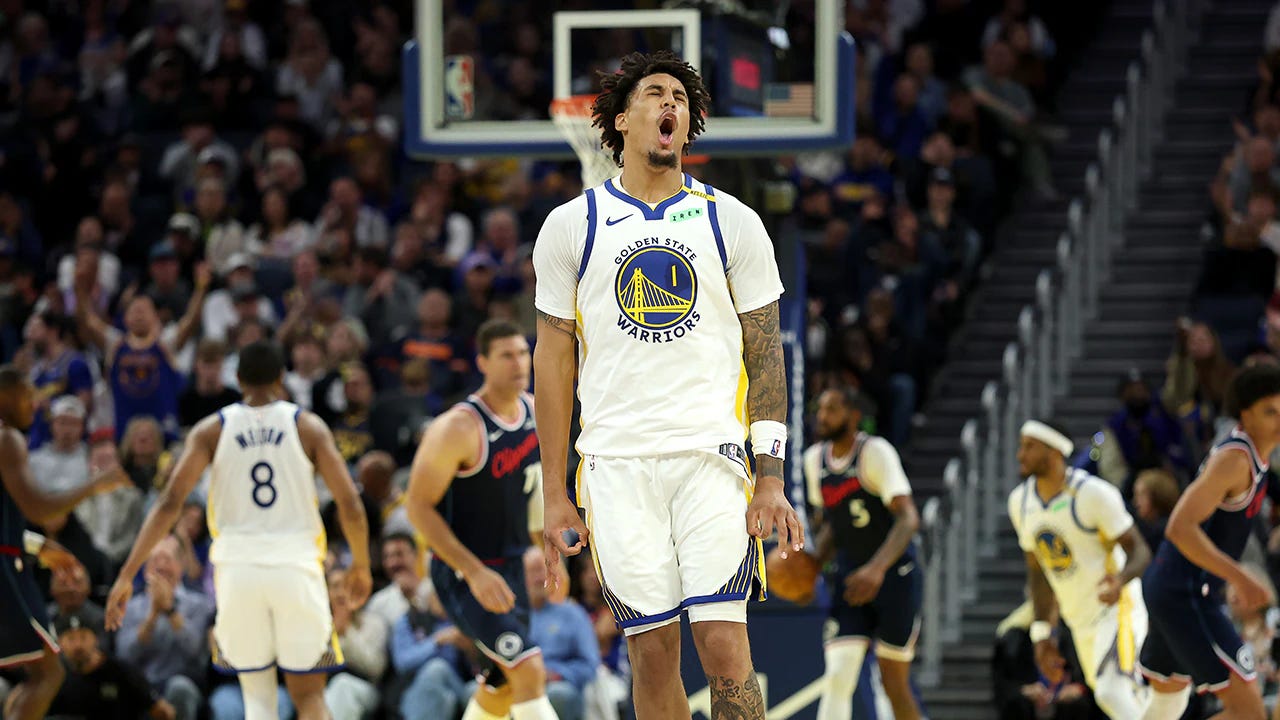
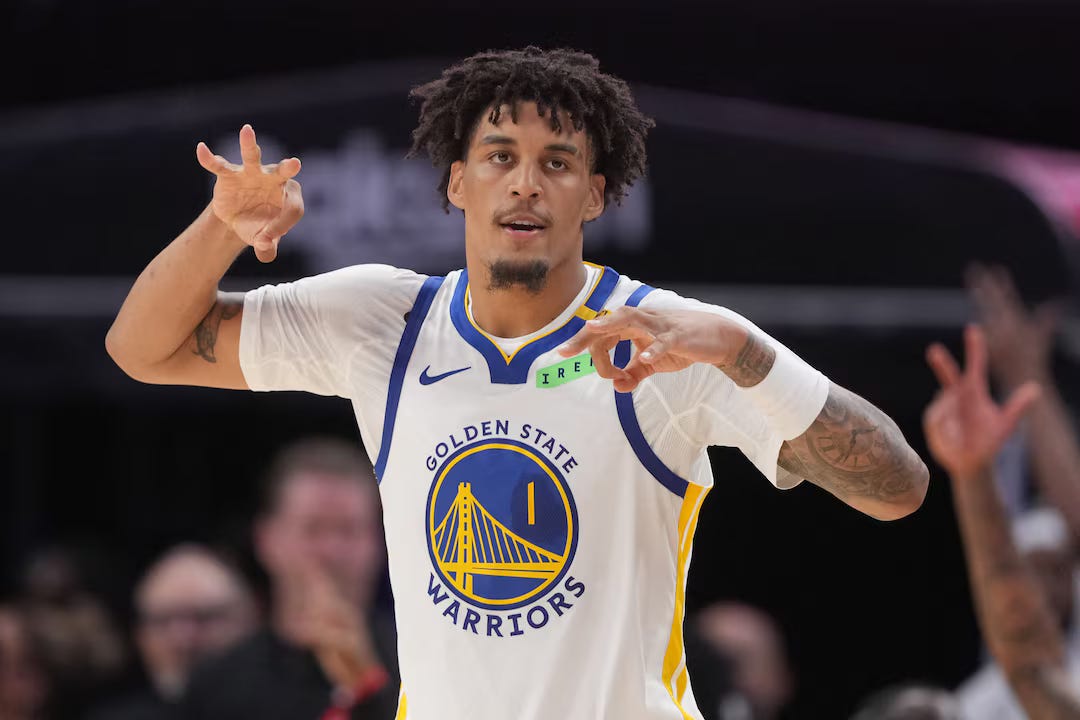
On Sunday night, with Steph Curry and Draymond Green watching from the sidelines, Lendeborg erupted for 37 points and six assists against the LA Clippers. He shot 13/19 from the field, knocked down six three-point shots and led Golden State to a 124-112 victory.
It was the most points scored by a Warriors rookie since Curry dropped 42 back in April 2010. In fact, the only other players in franchise history to score 30+ points twice within their first seven games were Wilt Chamberlain and Rick Barry.
That’s a fairly exclusive club to join before you’ve even completed your second week at work.
Through seven games, Lendeborg is averaging 22.3 points, 7.3 rebounds, and 3.7 assists on 64.5% true shooting.
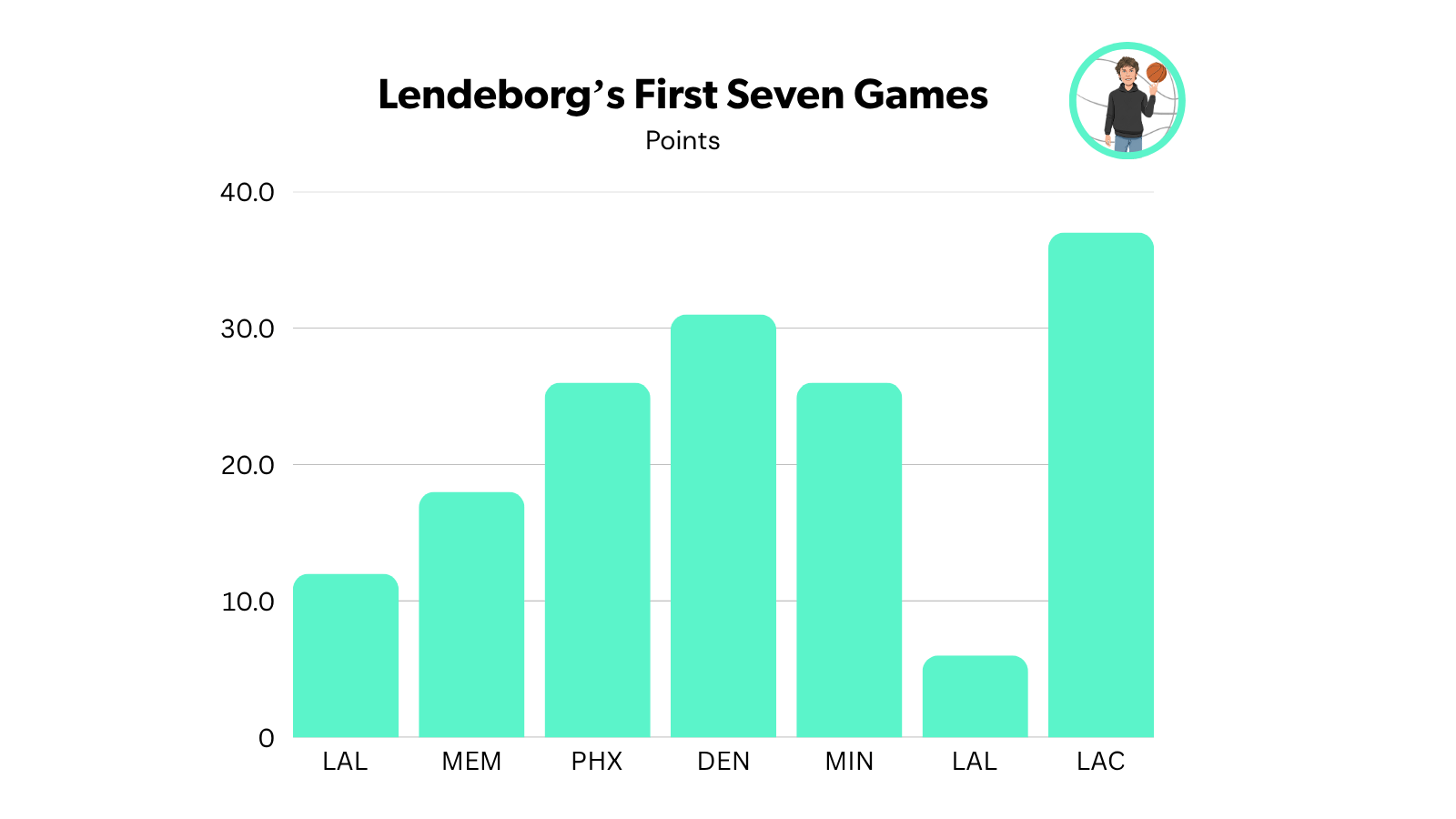
Those numbers are particularly extraordinary. They’re also based on sveen games, which is approximately enough time for NBA fans to declare someone a future Hall of Famer and then demand they be traded following one bad performance.
But Lendeborg’s emergence raises a genuinely worthwhile question about how the NBA evaluates young talent.
At what point does the pursuit of future upside cause teams to undervalue players who are already really good at basketball?
Too Old for Potential
When Golden State selected Lendeborg with the 11th overall pick in June, scouts had a reasonably clear idea of what they were getting.
A 6’9” forward with a wingspan approaching 7’4”. A versatile defender who could switch across positions, rebound, pass, and shoot. Someone comfortable making quick decisions without needing the offense built entirely around him. And a champion after winning it all with Michigan last season in college.
However, the concerns around him were equally familiar.
Lendeborg lacked an explosive first step and advanced self-creation package teams typically associate with star offensive prospects. His age also created questions about his remaining room to grow and how much additional development he could realistically achieve.
Those weren’t imaginary concerns. Even through his impressive first seven games, he’s committing turnovers on 17.1% of his used possessions, and his individual shot creation remains something that requires closer examination.
But consider the underlying philosophy.
NBA teams spend enormous resources trying to predict what 19-year-olds might look like at 24. Lendeborg is already 24, and we’ve spent years watching him develop precisely the skills teams hope those younger prospects eventually acquire.
His journey was anything but conventional.
He began at Arizona Western College, became the National Junior College Athletic Association’s all-time leading rebounder, transferred to the University of Alabama at Birmingham, won two conference Defensive Player of the Year awards, and eventually landed at Michigan for his final year.
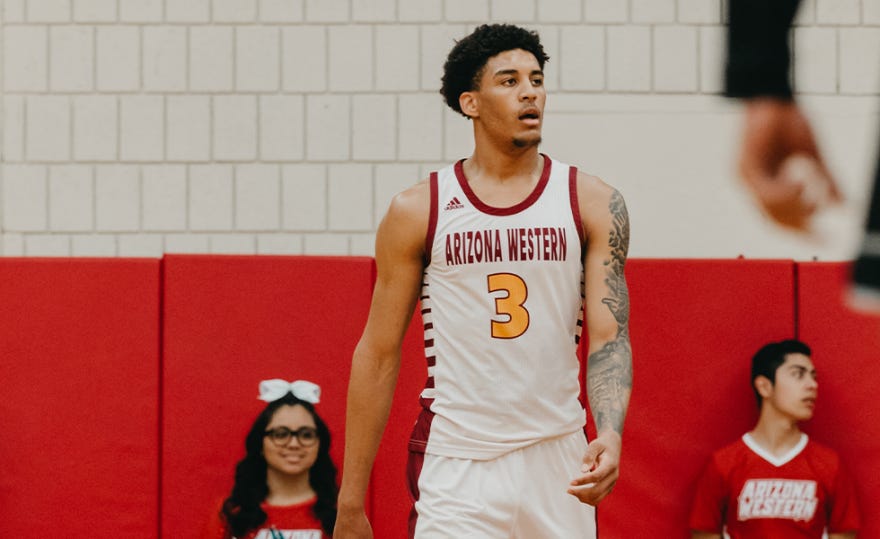
By the end of his college career, he’d become a national champion and Big Ten Player of the Year.
Five years of college basketball, multiple programs and thousands of possessions spent learning how to contribute in different environments.
There is value in that experience, even if it’s considerably harder to package into an exciting draft-night projection.
Some Skills Travel
What makes Lendeborg particularly interesing is how much of his collegiate profile appears to have followed him into the NBA.
At Michigan, he averaged 15.1 points, 6.8 rebounds, 3.2 assists, 1.1 steals, and 1.2 blocks. He also shot 37.2% from three and 82.4% from the free throw line.
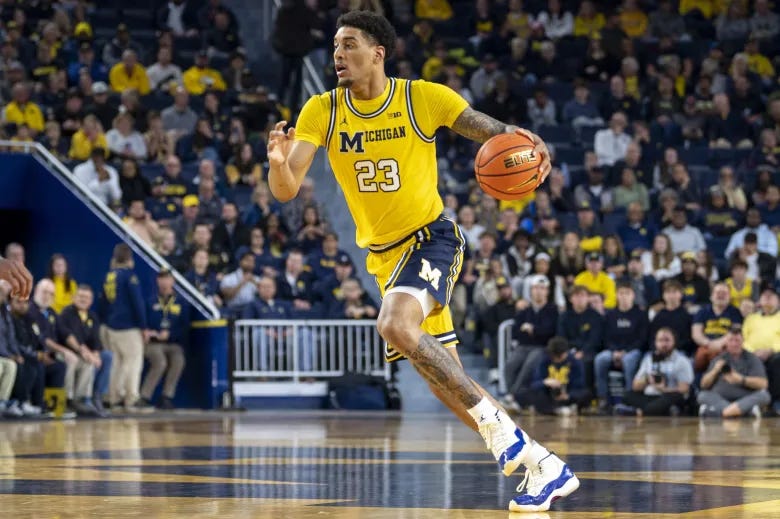
Perhaps the most revealing statistic was buried in his passing numbers: 129 assists just 42 turnovers. That’s a 3.07 assist-to-turnover ratio for someone standing 6’9”.
Lendeborg’s game was built around a diverse collection of useful skills. He could attack a closeout, move the ball, defend multiple positions, hit open jumpers, and contribute on the glass.
The above are all responsibilities NBA teams routinely spend years teaching their young players.
So far, the transition has been remarkably productive. He’s shooting 52.0% from the field and 40.9% from three while carrying a 27.1% usage rate, an unusually substantial offensive workload for a rookie.
Of course, that three-point percentage could change dramatically over the next few weeks. He’s made 18 of 44 attempts, and it’s far too early to treat that percentage as his established shooting ability.
His six-point, five-turnover performance against the lakers on October 30 also demonstrated how quickly things can unravel.
Yet the encouraging part is the breadth of his contribution.
Lendeborg has already scored 30 points twice, collected 13 rebounds in another game, and recorded six assists in three separate appearances.
Golden State is discovering that its rookie can contribute in a remarkable variety of ways.
And that versatility may be the most valuable aspect of his development.
The Older Rookie Trap
Whenever an experienced college player exceeds expectations, the same collection of names inevitably surfaces.
Jalen Brunson. Derrick White. Desmond Bane. Malcolm Brogdon. Josh Hart.
All entered the league with significant college experience. All were selected outside the lottery. All ultimately provided substantial value relative to their draft positions.
Brogdon, selected 36th in 2016, won Rookie of the Year. Brunson, taken 33rd in 2018, eventually developed into one of the league’s premier offensive guards. Bane became a high-level scorer after being selected 30th overall.
It’s tempting to look at those examples and conclude NBA teams have a serious problem evaluating older prospects, but the argument becomes considerably less convincing once we remember the players who didn’t work out.
We naturally remember the successful 22 and 23-year-old rookies while forgetting the many others who struggled to establish NBA careers.
There is also a legitimate reason teams prioritize youth. A 19-year-old might require three seasons to reach the level of a productive 23-year-old rookie. But if he eventually develops into an All-NBA player, the delayed return was unquestionably worth the investment.
The real comparison involves probabilities, development timelines and the value of different outcomes.
What’s the expected return from a teenager with substantial upside but uncertain NBA skills? How does that compare with a 23-year-old who might be ready to provide high-level minutes immediately?
The answer changes depending on the team making the selection.
And that’s where Golden State enters the conversation.
The Price of Readiness
For a franchise built around a veteran core, the next three seasons may be considerably more important than what happens eight years from now. Golden State has every reason to value players capable of helping immediately.
Lendeborg’s shooting, passing and defensive versatility were already identified as excellent fits for the Warriors before the draft. The organization could reasonably envision him contributing without requiring the same developmental patience a rebuilding franchise might offer.
Then came Sunday against the Clippers. With Curry and Green unavailable, Lendeborg demonstrated that his responsibilities could extend considerably beyond finishing plays created by established stars.
That doesn’t establish him as a future primary offensive option. Six made three-pointers can transform almost anybody’s scoring total, and seven games are insufficient to determine his long-term ceiling.
But it complicates the assumption that his established skill set necessarily limits his developmental potential.
Perhaps his experience has made him more prepared to recognize opportunities. Perhaps his maturity allows him to adapt to different responsibilities more quickly. Perhaps some of the skills dismissed as relatively ordinary because he developed them in college become much more valuable when translated into an NBA environment.
All remain possibilities rather than settled conclusions.
It’s also worth remembering that Lendeborg was selected 11th overall. Golden State clearly recognized his ability, and he was hardly some anonymous prospect discovered at the end of the second round.
Still, his early success raises an interesting question about draft valuation. When evaluating a young prospect, teams routinely pay a premium for what that player could eventually become.
How much should they be willing to pay for someone who has already become a very good basketball player?
Yaxel Lendeborg is seven games into his NBA career. There is plenty of time for his efficiency to decline, for opponents to exploit his limitations, or for his offensive role to settle into something less spectacular.
But if he continues producing, the conversation surrounding his age could become increasingly revealing. Because sometimes the most intriguing prospect in the draft is the one who has already developed into an NBA-ready player. Sometimes its easy to overthink and take a chance on the 19-year-old phenom. But sometimes, the answer is the obvious one right in front of you, and so far it looks like the Warriors made the right decision.